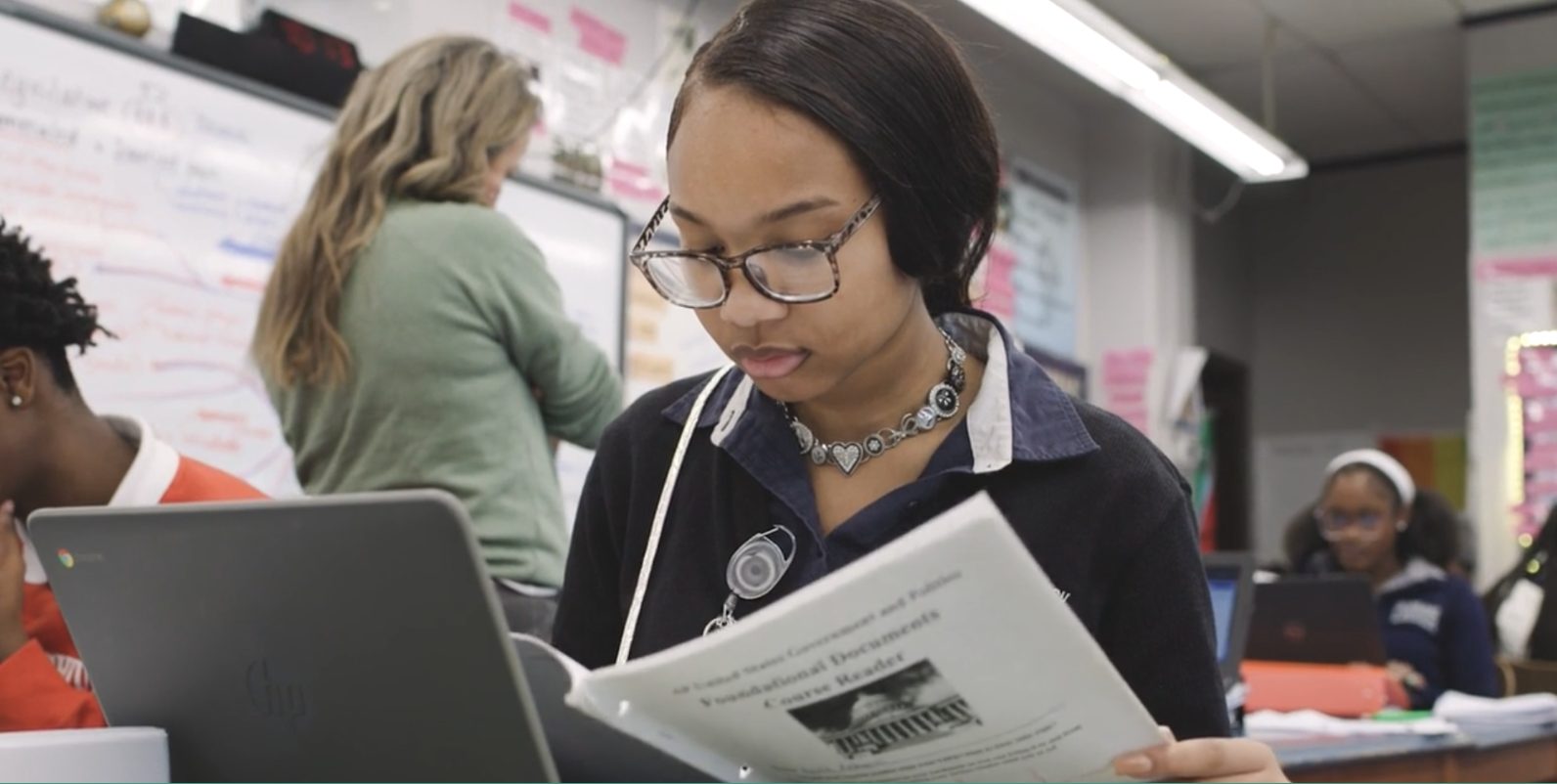
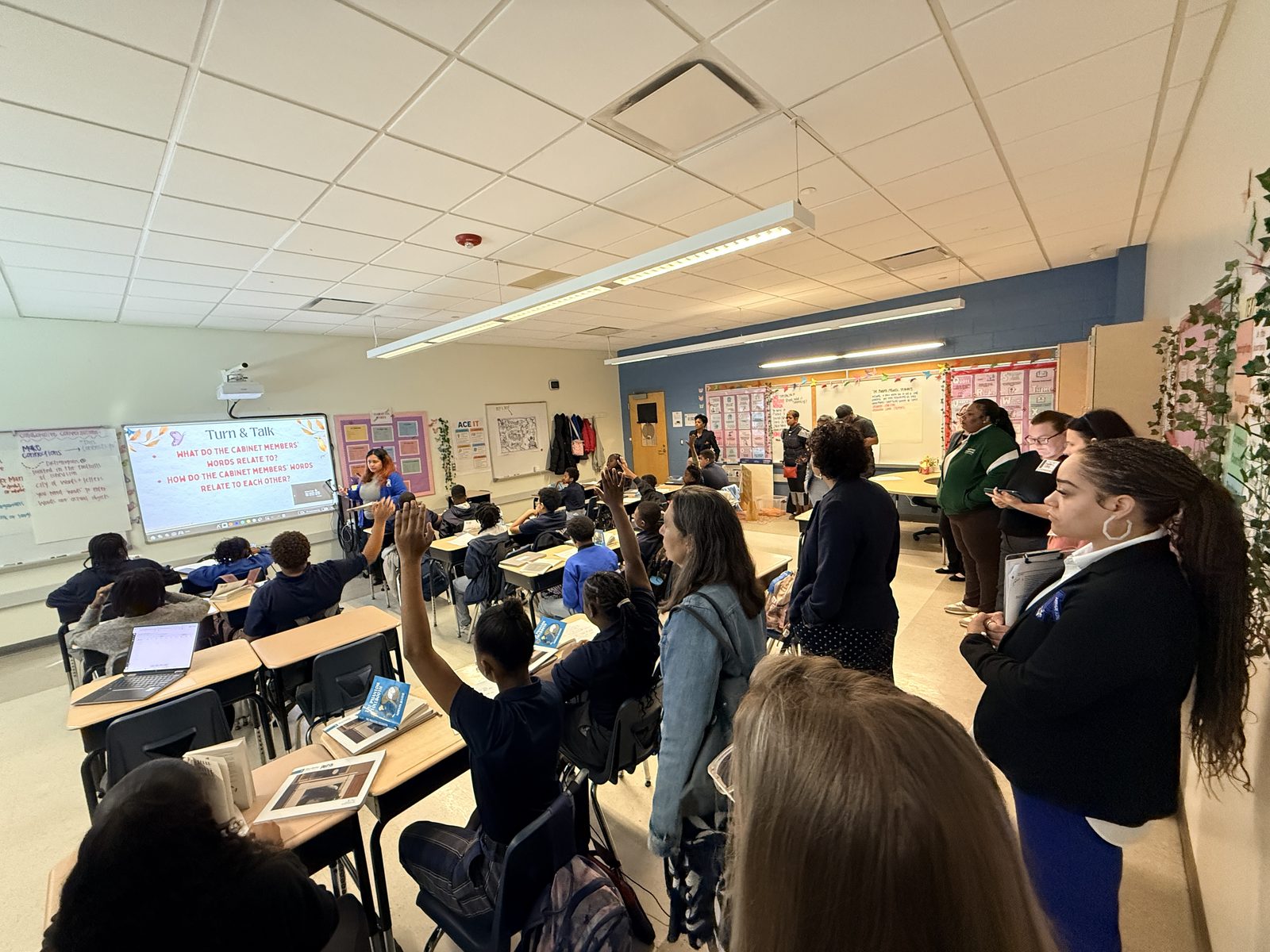
The New Orleans AI Education Fund accelerates academic gains across the city by helping educators and schools use AI thoughtfully, strategically, and in service of student learning. We see AI as a tool to help educators have their greatest impact, while never sacrificing the human connection that makes schools vibrant and nurturing institutions.
The Fund launched in 2025 in response to requests from local educators and system leaders for help navigating AI in their schools. It is a time-bound effort, running on a five-year horizon from 2025 to 2029. We are grateful to our anchor funders, The Booth-Bricker Fund, New Schools for New Orleans, and Rosenthal Family Foundation, for their collaboration and support.
Four strategies
1Build leaders' AI expertise. We fund learning cohorts that help charter and system leaders make informed, strategic decisions about AI.
2Support strategic implementation of AI-powered tools. We make grants to fund leader capacity, coaching, and access to evidence-backed software.
3Enable school model redesign. Launching in 2027, we will support a handful of teams to redesign their schools to leverage AI across instruction and operations.
4Cultivate the ecosystem. We engage with district and state partners on policy, professional development, funding, and more.
For 2027–28, Coursemojo is listed in the SuperApp workbook as eligible for Direct Student
Services (DSS) funding for Grades 6–10. To continue, or to add schools or grades, include
Coursemojo in your SuperApp request by January 22, 2027.
SuperApp workbook →(Direct Student Service tab, under AI-Powered Academic Programs)
[Placeholder for a longer write-up: what stood out across the tools, what schools
asked about most, and what to look for in a math pilot. This space can hold several paragraphs.]
September 2026Previous check-in
What we heard in the 2027 Priorities Survey
The survey closed on September 10, 2026. Nine of our 12 partner CMOs responded, and
together they serve about 45% of New Orleans public school students. Each CMO spread ten votes across
the tools options and another ten across the capacity-building options. Where two people from one CMO
responded, we averaged their votes. Thank you to everyone who took the time.
Tools for student learning
Option
Average votes per CMO
CMOs giving it 5 or more
CMOs giving it 2 or fewer
Math investments
4.6
4 of 9
0 of 9
Special populations
3.4
3 of 9
2 of 9
Student AI fluency
1.8
1 of 9
5 of 9
Each CMO counts once, however many people from it responded.
I want to support Math in the same way Coursemojo is supporting English!
Collegiate Academies
We don’t have math solutions with strong efficacy data.
KIPP New Orleans
Math is our biggest growth need at NOMMA and across the city.
NOMMA
Capacity-building
Option
Average votes per CMO
CMOs giving it 5 or more
CMOs giving it 2 or fewer
NOLA Builders Cohort
6.9
7 of 9
1 of 9
Outcomes-based contracting
2.2
1 of 9
4 of 9
School model redesign
0.9
1 of 9
8 of 9
The same nine CMOs, with a separate set of ten votes.
We lack talent and resources to hire an A plus back office; we need to be more efficient/effective here.
KIPP New Orleans
I like the idea of people solving problems who are not on the Chiefs team.
Crescent City Schools
My advice is give tight deadlines, like revamp two workflows in 6 months.
Ben Franklin High School
What stood out
On Tools, Math was the only option every CMO supported. Several of you said you want a math tool with
the evidence and curriculum fit that Coursemojo brought to ELA, and that you do not have one today.
Audubon, CANO, and FirstLine ranked special populations first, and Audubon and CANO both wrote about
English learners in particular. Student AI fluency divided the group, with Ben Franklin as a strong
supporter.
The NOLA Builders Cohort drew the strongest support of anything in the survey. Crescent City, FirstLine,
and NOMMA put all ten of their capacity-building votes on it. On how to run it, CANO suggested starting
with processes that are slow and repetitive today, and NSNO suggested NOLA PS might also benefit.
Outcomes-Based Contracting (OBC) and school model redesign drew less interest. FirstLine already uses
outcomes-based contracts. Audubon made a case for redesign, while FirstLine called it too risky for now
and asked the Fund to help with policy that creates leeway for proven schools to try new approaches.
What happens next
Tools
We are planning a series of math tool demos between now and Thanksgiving. CMOs will tell us which
math challenges they think AI tools could help with, and we will build the lineup around your
answers.
Check out this demo site(coming soon)
From there, we would like to make small grants available to subsidize pilots.
Then you could apply in March or April for full implementation grants for 2027-28.
Capacity-Building
We are working to determine the best path forward here, and we will share more once we do.
March 2027Upcoming
Materials we share at this check-in will be posted here.
June 2027Upcoming
Materials we share at this check-in will be posted here.